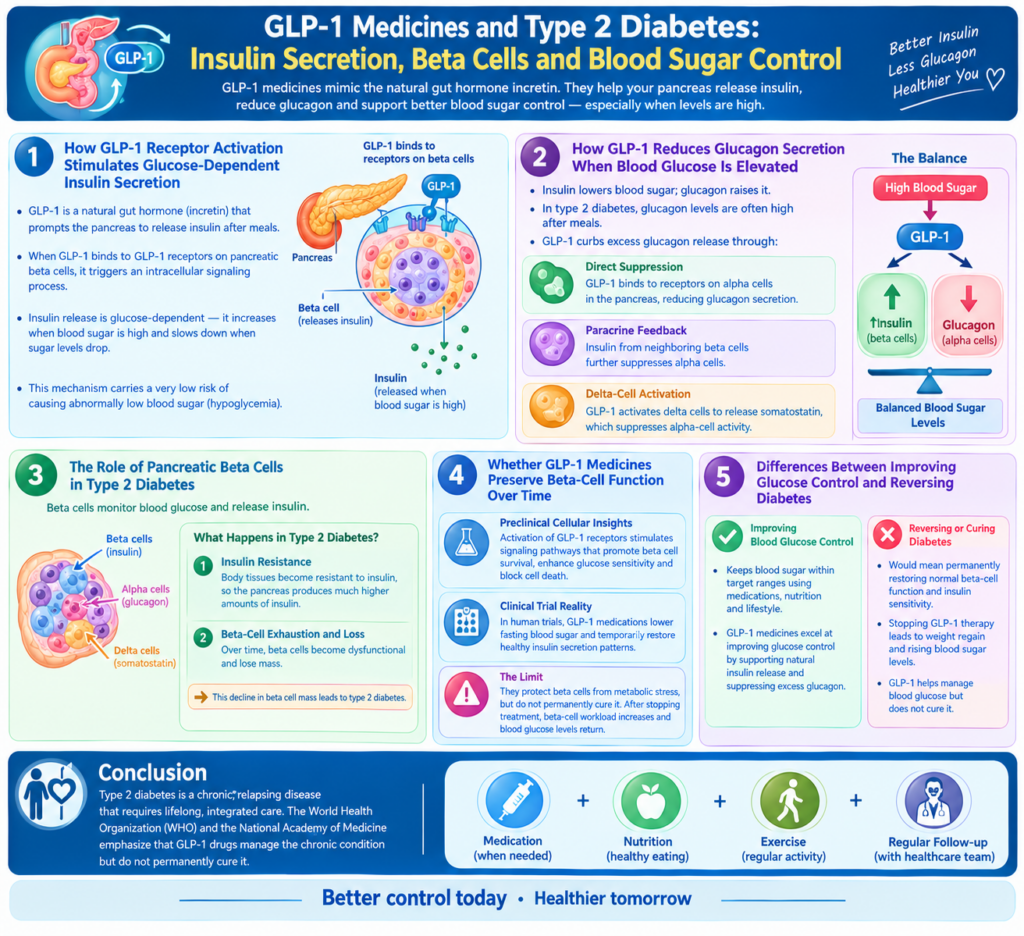
- How GLP-1 Receptor Activation Stimulates Glucose-Dependent Insulin Secretion
- Glucagon-like peptide-1 (GLP-1): Since the GLP-1 medicines mimic the natural gut hormone incretin that prompts pancreas to release insulin after meal
- When GLP-1 binds to GLP-1 receptors on pancreatic beta cells, it triggers an intracellular signaling
- GLP-1 stimulates the release of insulin which is glucose-dependent. It means hormones only trigger insulin when blood glucose level are high above normal levels. It slows insulin production when sugar level drops. Because of this mechanism, GLP-1 receptor agonist medications carry a very low risk of causing abnormally low blood sugar
- How GLP-1 Reduces Glucagon Secretion When Blood Glucose Is Elevated
- To manage blood sugar two opposing hormones needs to be managed. Insulin that lowers blood sugar and glucagon that raises the blood sugar.
- In people living with type 2 diabetes, glucagon levels are often high after meals. Glucagon is produced by alpha cells in the pancreas and signals the liver to release stored glucose into the bloodstream
- GLP-1 plays a key role in curbing excess glucagon release when blood glucose is higher
- Direct Suppression: GLP-1 peptides bind to receptors on alpha cells found on pancreas. This reduces glucagon secretion.
- Paracrine Feedback: insulin released from neighboring beta cells that further suppresses nearby alpha cells.
- Delta-Cell Activation: GLP-1 activates neighboring delta cells in the pancreas to secrete somatostatin, a hormone that suppresses alpha-cell activity and suppress glucagon release
- The Role of Pancreatic Beta Cells in Type 2 Diabetes
beta cells continuously monitor blood glucose levels and release appropriate amounts of insulin to transport glucose out of the bloodstream and into cells for energy
- Insulin Resistance: Body tissues (such as muscle, liver, and fat) become resistant to insulin’s signals. Thereby requiring the pancreas to produce much higher quantities of insulin
- Beta-Cell Exhaustion and Loss: To compensate for insulin resistance, beta cells work overtime for years. Over time, beta cell becomes dysfunctional.
- This decline in beta cell mass leads to type 2 diabetes.
- Whether GLP-1 Medicines Preserve Beta-Cell Function Over Time:
- Preclinical Cellular Insights: Laboratory and molecular studies show that GLP-1 receptor when activated they stimulate the signaling pathway within beta cells. This process promote beta cell survival, enhances glucose sensitivity, and blocks proteins that trigger cell death
- Clinical Trial Reality: In human clinical trials, GLP-1 medications lower fasting blood sugar, and temporarily restore healthy insulin secretion patterns.
- While GLP-1 medicines protect beta cells from metabolic stress, clinical evidence shows that they do not permanently cure it. When medication is discontinued, beta-cell workload increases again and blood glucose levels return.
- Differences Between Improving Glucose Control and Reversing Diabetes
- Improving Blood Glucose Control: This refers to successfully managing blood sugar levels within target ranges using appropriate medications, nutrition, and lifestyle strategies. GLP-1 medications excel at improving glucose control by supporting natural insulin release, suppressing excess glucagon.
- Reversing or Curing Diabetes: Clinical studies demonstrate that stopping GLP-1 therapy leads to a return of weight regain, and rising blood sugar levels. True reversal or cure would mean permanently restoring normal beta-cell function and insulin sensitivity so that blood sugar remains completely normal. GLP-1 medicine helps manage blood glucose but they do not cure it.
Conclusion:
the World Health Organization (WHO) and the National Academy of Medicine emphasize that type 2 diabetes and obesity are chronic, relapsing diseases that require lifelong, integrated care. GLP-1 drugs manage the chronic condition but do not permanently cure it.