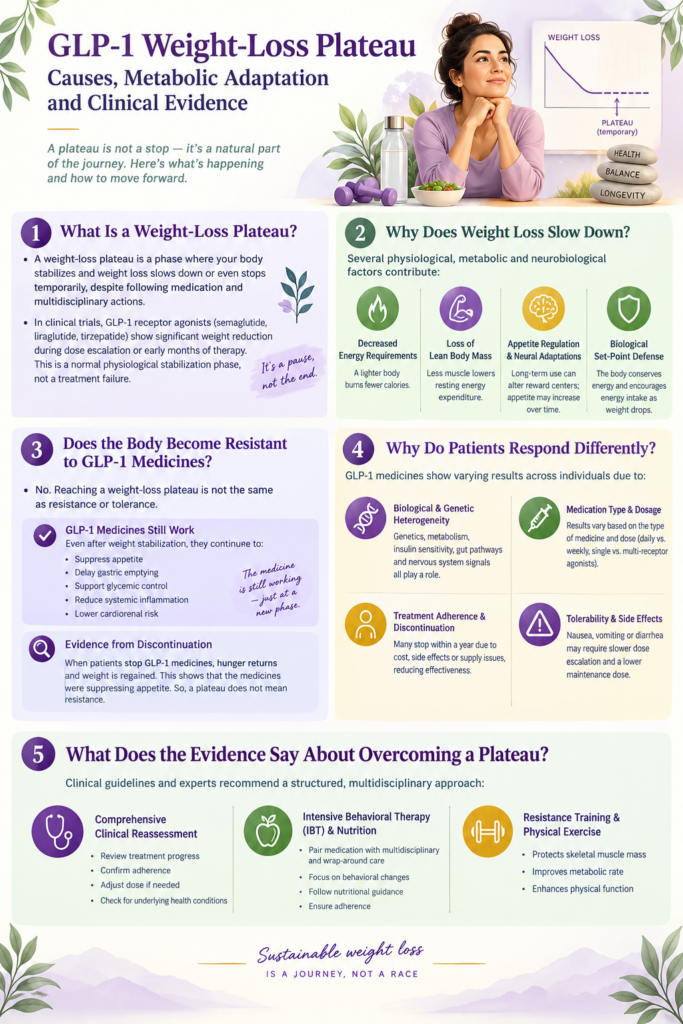
- What Is a Weight-Loss Plateau?
- Weight loss plateau refers to a phase in the wight loss management treatment where body stabilizes and weight loss slows down or even stops temporarily. Despite being adhered to medication and multidisciplinary actions weight loss continues to slow down or even stops.
- In clinical trials GLp-1 receptor agonists such as semaglutide, liraglutide, or tirzepatide
show weight reductions during dose escalation or during early months of therapy.
This does not indicate a treatment failure rather it is a normal physiological stabilization phase.
- Why Does Weight Loss Slow Down?
There are several factors affecting weight loss journey. Why it slows down is a combination of factors such as physiological, metabolic, and neurobiological adaptations:
- Decreased Energy Requirements: afterweight loss the energy required to maintain lesser weight of the patients becomes less. A lighter body burns fewer calories.
- Loss of Lean Body Mass: weight loss usually involves reduction in both fat mass and lean body mass (skeletal muscle) losing lean mass lowers baseline resting energy expenditure, further slowing the rate of weight loss
- Appetite Regulation & Neural Adaptations: Neurobiological research has shown longer-term GLP-1 consumption can trigger central compensatory adaptations which means long term treatment can alter the reward center in response to food intake. Unlike in the initial weeks of treatment where there is loss of appetite long term treatment shows increase in appetite.
- Biological Set-Point Defense: obesity is a chronic and complex condition. On long term treatment there is decreased in energy requirement also as the weight drops, internal physiological mechanisms adjust to conserve energy and encourage energy intake
- Does the Body Become Resistant to GLP-1 Medicines?
- Clinically reaching weight loss plateau is not equivalent to GLP-1 medicines resistance or tolerance.
- Continued Biological Efficacy: even after weight loss stabilization GLP-1 RAs continue its action as an appetite suppression. They still delay gastric emptying, support glycemic control, reduce systemic inflammation, and lower cardiorenal risk. They continue to manage weight loss actively.
- Evidence from Discontinuation: Weight regain after discontinuation evidently show that the GLP-1 medicines was responsible for prevention of weight regain when the body weight was stationary. The patients observed hunger regain and weight regain this shows that GLP-1 medicines were suppressing the appetite. Hence weight loss plateau does not mean resistance to GLP-1 medicines.
- Why Do Patients Respond Differently?
GLP-1 medicines have shown varying results across different population. There are several factors contributing to this fact. It results in varying response due to key clinical and biological factors.
- Biological & Genetic Heterogeneity: Obesity is a chronic disease influenced by diverse genetic, metabolic and biological factors. It depends on insulin sensitivity, gastroenterological pathways, nervous system signals etc. These factor greatly influence on how the medicine efficacy is different for different individuals.
- Medication Type & Dosage: Weight loss differ patient to patient that has largely to do with what type of medicines is being administered and the dosage as to what dose is being advised to the patients (e.g., daily vs. weekly injections, single vs. multi-receptor agonists)
- Treatment Adherence & Discontinuation: studies have shown that most of the patients stop taking medicine after one year of treatment. This could be due to any reason such as cost, side effects or supply shortage. These unplanned interruptions cause decrease in treatment efficacy
- Tolerability & Side Effects: some patients observe severe side effects such as nausea vomiting or Diarrhea. In this situation the health care professional shall slow down dose escalation and keep lower dosage for maintenance.
- What Does the Evidence Say About Overcoming a Plateau?
- Clinical guidelines and expert emphasize a structured, multidisciplinary approach to managing weight-loss plateaus:
- Comprehensive Clinical Reassessment: Professional healthcare providers evaluate overall treatment procedure. They confirm adherence to medicine, they change doses if required or assess underlying health conditions.
- Intensive Behavioral Therapy (IBT) & Nutrition: global health experts and WHO recommend that GLP-1 medicines treatment should be paired with multidisciplinary and wrap around care. This includes IBT and nutritional guidance and adherence.
- Resistance Training & Physical Exercise: Incorporating regular physical exercise specifically strength or resistance training helps protect skeletal muscle mass, improves metabolic rate, and enhances physical function
- Medical Strategy Adjustments: In some situations, professional healthcare provides may alter the medicine dosage as per requirement after evaluating patients’ health condition. They may even suggest transitioning to different agent.
- When Should a Plateau Raise Concern?
- Severe or Persistent Gastrointestinal Symptoms: If common side effects become persistent like nausea vomiting diarrhea patients should review clinically.
- Inadequate Nutritional Intake & Malnutrition: due to appetite suppression and delayed gastric emptying may lead to protein deficient, severe calorie restriction and deficiency in micro nutrient. This can cause severe fatigue and muscle wasting
- Loss of Muscle Strength & Increased Fall Risk: In older people loss of muscle strength increases fall risk. This needs urgent medical review
- Emergence of Unexplained Complications: Unexplained abdominal pain or significant changes in mood and psychiatric well-being require prompt medical review
Conclusion:
GLP-1 is an effective weight loss treatment. temporary slowing down on weight loss does not mean resistance to GLP-1 medicines. One should continue treatment on GLP-1 and overcome Weight loss plateau by the guidelines advised by the professional healthcare provider. The dosage may need to be adjusted or more physical activity may require.