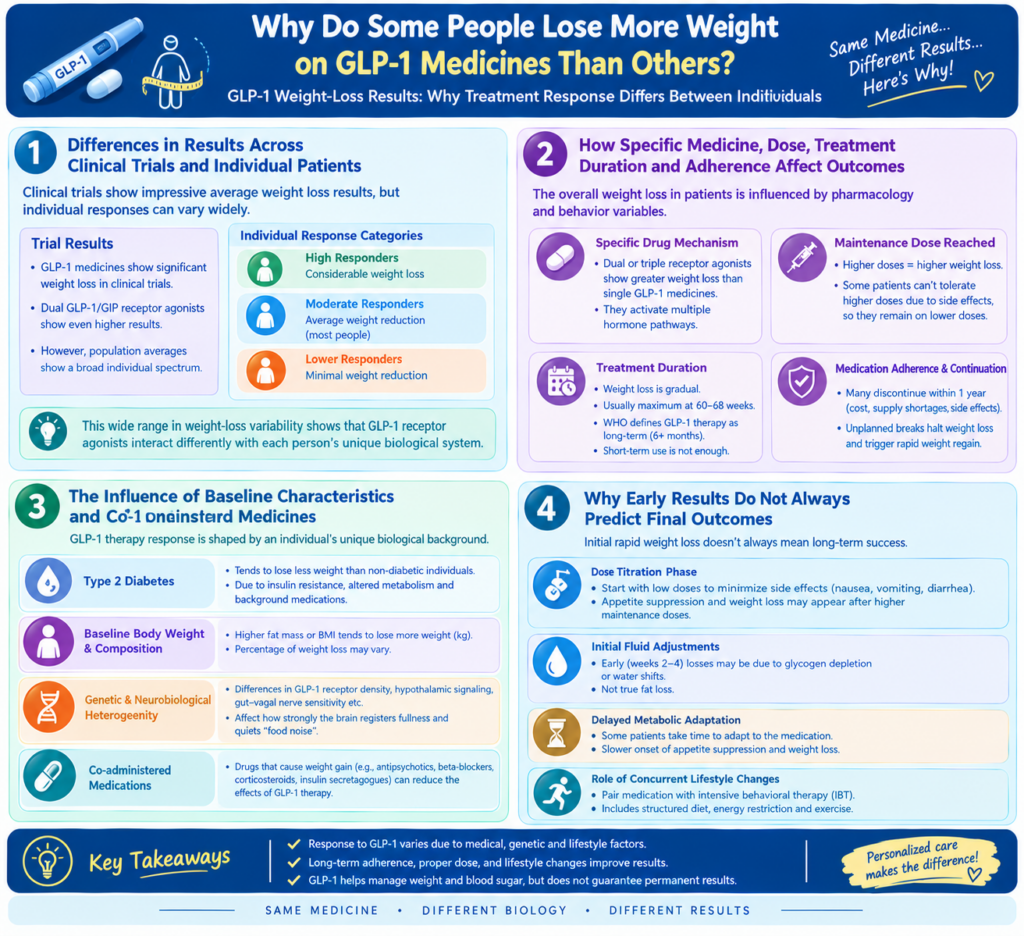
GLP-1 Weight-Loss Results: Why Treatment Response Differs Between Individuals
- Differences in Results Across Clinical Trials and Individual Patients
Clinical trials have shown impressive average GLP-1 weight-loss results. However individual responses differ to the above observation. In large scale clinical trials adults taking GLP-1 medicines have shown significant weight loss also individuals taking dual GLP-1/GIP receptor agonists have shown considerably higher results.
However, population average show broad individual spectrum.
- High Responders: Some trial patients show considerable weight loss.
- Moderate Responders: a large portion of the population show average weight reduction.
- Lower Responders: A small percentage of the population show minimal weight reduction
This wide range in weight-loss variability and individual response demonstrates that GLP-1 receptor agonists interact differently with each person’s unique biological system.
- How Specific Medicine, Dose, Treatment Duration, and Adherence Affect Outcomes
The overall weight loss in patients are affected greatly by pharmacology and behavior variables.
- Specific Drug Mechanism: Dual or triple receptor agonists have shown greater effect on patients than single GLP-1 medicines. They activate multiple hormone pathways simultaneously.
- Maintenance Dose Reached: Clinical trials consistently demonstrate a clear dose-dependent relationship Those patients who had reached higher dosage have shown higher weight loss while those who could not tolerate the side effects had to remain on lower dosage thereby lesser weight reduction.
- Treatment Duration: weight loss is a gradual process. It is usually at its maximum at 60 – 68 weeks of continuous treatment. The World Health Organization WHO has defined GLP-1 therapy as a long-term treatment (6 months or longer). They emphasize that short-term use is insufficient to achieve or sustain maximum benefits
- Medication Adherence & Continuation: Real-world studies show that a majority of patients discontinue GLP-1 therapy within one year due to cost, supply shortages, or side effects. This unplanned interruption halt weight loss and trigger a rapid return of baseline appetite and weight regain. This makes continuous adherence important for sustained results
- The Influence of Baseline Characteristics and Co-Administered Medicines
GLP-1 therapy response is greatly influenced by an individual’s unique biological background.
- Presence of Type 2 Diabetes: Patients having type 2 diabetes tend to lose less weight on GLP-1 therapy than individuals without diabetes. Since the diabetic patients have altered metabolic signaling, long standing insulin resistance and background medications, all these factor leads to modification of how they body responds to energy deficit.
- Baseline Body Weight & Composition: individuals having higher fat mass or body mass index tends to lose higher weight in kilograms. However, the percentage in weight reduction may vary
- Genetic and Neurobiological Heterogeneity: Obesity is a complex chronic disease it is largely affected by diverse genetic, metabolic, and neuroendocrine pathways. Factors such as central GLP-1 receptor density, hypothalamic signaling efficiency, and gut vagal nerve sensitivity etc. vary by individual. They affect how strongly an individual’s brain registers fullness and quiets “food noise”.
- Co-Administered Medications: concurrent use of certain medication that promote weight gain such as certain atypical antipsychotics, beta-blockers, corticosteroids, or insulin secretagogues can counter the effects of weight loss by GLP-1 therapies.
- Why Early Results Do Not Always Predict Final Outcomes
Clinicians usually consider an initial rapid weight loss as success however initial pace of weight loss is not a reliable predictor of long-term effects.
- Dose Titration Phase: Usually, to avoid side effects like nausea, vomiting diarrhea etc. the initial doses are at minimal and are escalated over the months’ time to minimize these side effects. Sometimes the appetite suppression and weight loss is observed after higher maintenance doses are reached.
- Initial Fluid Adjustments: In some cases the early (weeks 2-4 weeks) show rapid weight loss. However these could be due to glycogen depletion or shift in body water. This should not be mistaken as fat loss.
- Delayed Metabolic Adaptation: Sometimes the patients takes time to adapt to the medicine and show slower onset of appetite suppression and weight loss
- Role of Concurrent Lifestyle Changes: As emphasized by WHO Pairing pharmacotherapy with intensive behavioral therapy (IBT) including structured dietary energy restriction and physical exercise show positive results in the GLP-1 therapies.
- What Clinicians Can Monitor When Progress Differs From Expectations
When weigh loss is observed much below the targeted expectations , they need to be reassessed structurally by the clinicians.
- Evaluating Adherence & Administration: Clinician verify whether proper self-injection technique was used. Whether the dosage were administered as prescribed. For oral medicines whether there was strict adherence to morning fasting and low water dosing rules.
- Assessing Nutritional Quality & Protein Intake: Clinicians review whether the nutritional support was adequate or whether the patient was regularly taking nutrition rich food as advised.
- Optimizing Multidisciplinary Wraparound Care: As emphasized by National Academy of Medicine experts and WHO guidelines, pairing medication access with wraparound care—including dietitians, physical activity counselors, and behavioral coaching. These needs to be adhered strictly.
- Monitoring Body Composition & Muscle Mass: Assessing physical strength, and muscle function, particularly in older or vulnerable adults, to ensure weight reduction is improving health rather than causing muscle wasting.
- Adjusting Treatment Strategy: If a patient is confirmed to be a true lower responder, clinicians may evaluate switching to a multi-receptor agonist (such as a dual GIP/GLP-1 agent), adjusting maintenance dosage etc.