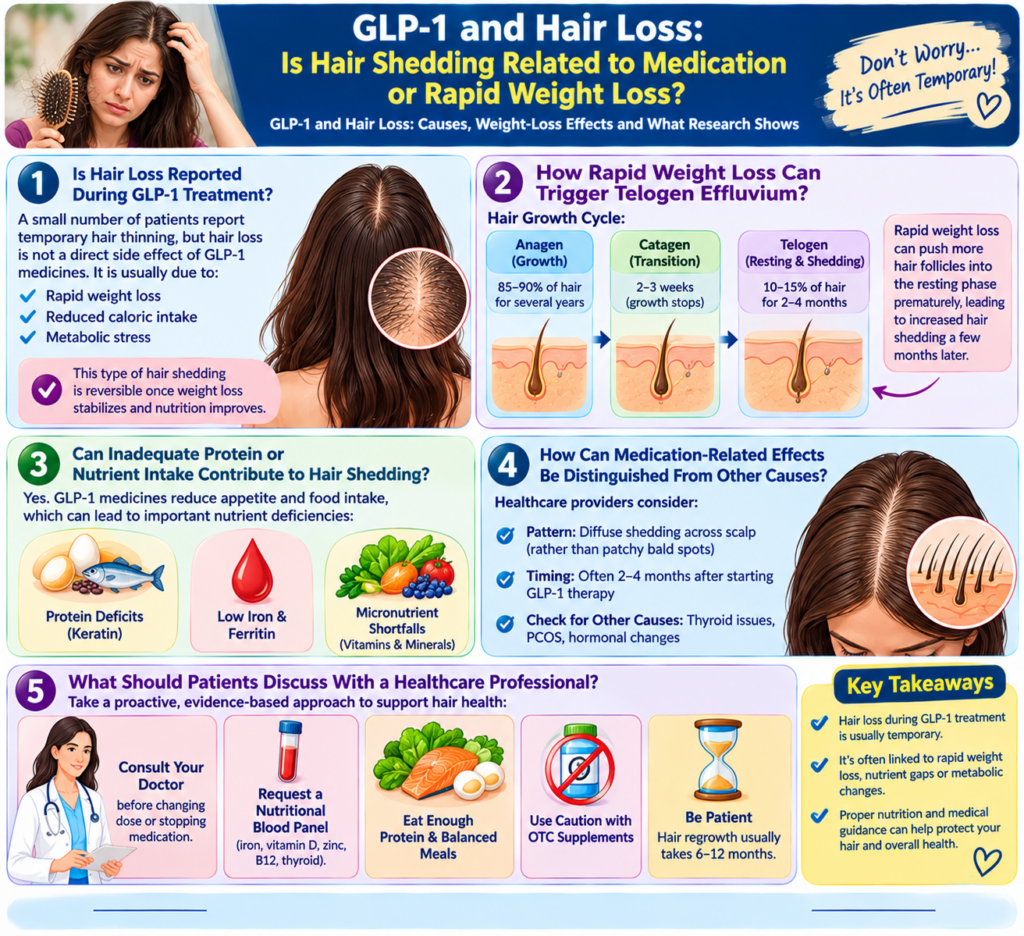
GLP-1 and Hair Loss: Causes, Weight-Loss Effects and What Research Shows
- Is Hair Loss Reported During GLP-1 Treatment?
During two decades of real world clinical trial a very small percentage of patients reported temporary hair thinning or increased hair shedding. However, medical experts and clinical researchers emphasize that hair loss is not a direct, toxic side effect of the GLP-1 drug molecule itself. It is well documented that hair thinning is a secondary response to weight loss reduced caloric intake, and metabolic stress that occur when body weight drops significantly over a short period. This condition is reversible once weight loss stabilizes and proper nutrition intake is maintained.
- How Rapid Weight Loss Can Trigger Telogen Effluvium?
the natural hair growth cycle is as follows:
Anagen Phase (Growth): at any given time 85-90% of your hair follicle is growing on your scalp. This phase lasts several years.
Catagen Phase (Transition): A brief 2-to-3-week period where hair growth stops and the follicle detaches from its blood supply.
Telogen Phase (Resting and Shedding): About 10% to 15% of hair follicles rest for roughly 2 to 4 months. After this the old hair fall out and new hair strand begin growing.
When the body undergoes a sudden physical stressor—such as rapid weight reduction, major surgery, severe illness, or drastic calorie restriction—it can trigger a temporary condition known as telogen effluvium weight loss.
Once telogen effluvium phase begins the anagen phase shifts to telogen phase prematurely. Since resting phase takes 2-4 months before hair starts falling out patients typically notice increased hair shedding several months after their most rapid phase of weight loss or medication initiation. This condition is reversible once weight loss stabilizes and proper nutrition intake is maintained.
- Can Inadequate Protein or Nutrient Intake Contribute to Hair Shedding?
Nutritional deficiency can cause hair loss. Because GLP-1 medications slow digestion and significantly reduce daily appetite, overall food volume drops. If intake of key nutrients falls below what the body needs it can lead to nutrition deficiency and hair loss.
Protein Deficits: hair is mostly composed of keratin a form of protein. When daily protein intake falls too low during weight loss the body conserves available amino acids for vital organs, shifting hair follicles into a resting state.
Low Iron and Ferritin: Iron is essential for cellular oxygen transport. Low iron stores (serum ferritin) are a leading cause of prolonged hair shedding.
Micronutrient Shortfalls: Inadequate intake of essential minerals and vitamins can weaken the hair follicle and increase fragility.
- How Can Medication-Related Effects Be Distinguished From Other Causes?
When evaluating hair shedding during GLP-1 therapy. The healthcare professional observes and tries to rule out the non-weight related cause of hair loss.
Shedding Pattern: Telogen effluvium causes diffuse shedding evenly across the entire scalp, rather than distinct patchy bald spots or a receding hairline.
Timing of Onset: hair shedding after 2-4 months of GLP-1 therapy may point to weight related telogen effluvium.
Ruling Out Thyroid Imbalances: Both underactive (hypothyroidism) and overactive (hyperthyroidism) thyroid conditions can cause hair loss. Routine blood tests help confirm that thyroid hormone levels remain normal.
Hormonal Fluctuations: Conditions like polycystic ovary syndrome (PCOS), postpartum recovery, or menopausal shifts can influence hair density and are evaluated separately.
- What Should Patients Discuss With a Healthcare Professional?
If you experience hair shedding while taking a GLP-1 medication, you must proactively take evidence-based approach to help support hair loss.
Consult Your Prescribing Provider: discuss hair loss with your doctor or dietician before changing dose or stopping medicine on your own.
Request a Nutritional Blood Panel: Ask your healthcare provider to check your blood levels for ferritin (stored iron), vitamin D, zinc, vitamin B12, and thyroid function to identify and correct any underlying deficiencies.
Prioritize Daily Protein and Balanced Meals: Aim to include high-quality protein at every meal to ensure your body has the building blocks needed for keratin production.
Use Caution with Over-the-Counter Supplements: Avoid unverified high-dose “hair growth” supplements without medical guidance
Practice Patience: Full hair recovery typically occurs over 6 to 12 months as your body adjusts to its new weight and steady nutrition.