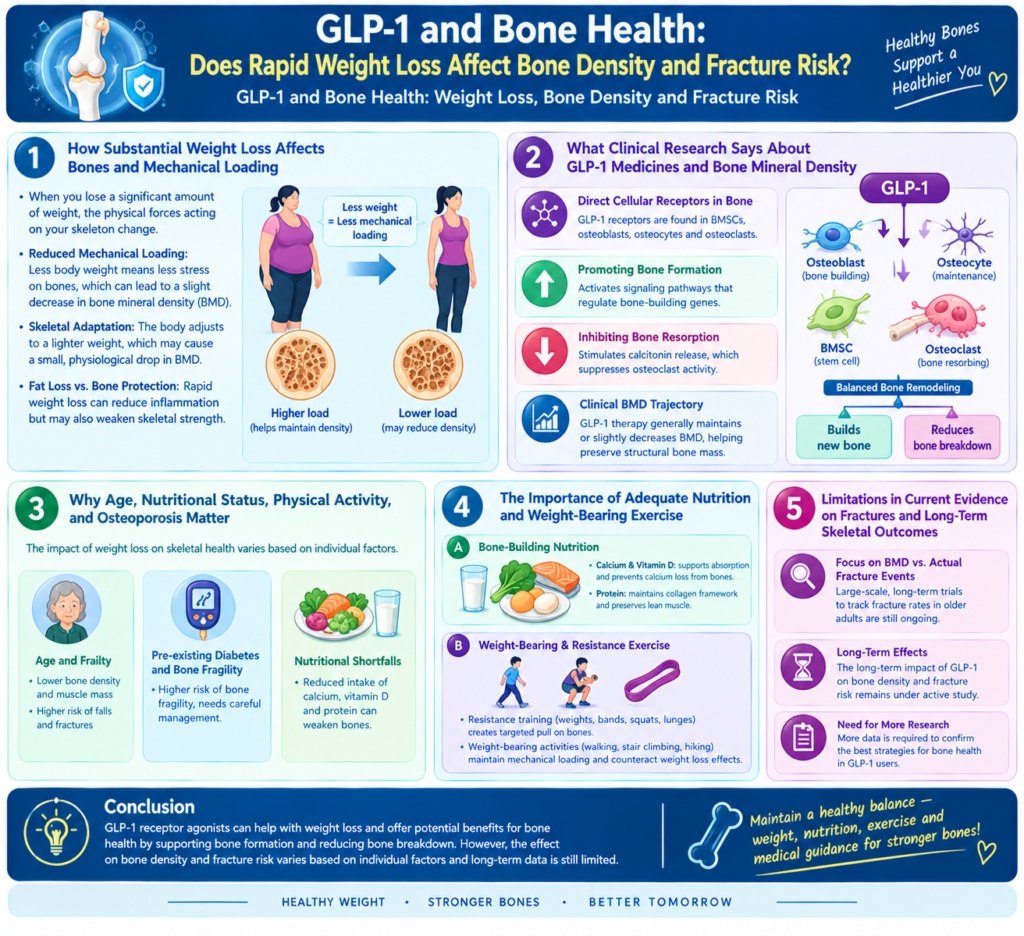
GLP-1 and Bone Health: Weight Loss, Bone Density and Fracture Risk
- How Substantial Weight Loss Affects Bones and Mechanical Loading
- When an individual loses a substantial amount of body weight, the physical forces acting on the skeleton change significantly.
- Reduced Mechanical Loading: Bones tissue naturally remodels based on the stress and load on it. Carrying higher weight of the obese patients exerts higher gravitational force and this naturally stimulates bone cells to build and maintain density. Due to weight loss the mechanical loading is reduced thereby reducing overall bone density.
- Skeletal Adaptation to Weight Reduction: Due to rapid weight loss there is less stress on the skeleton. In response the body adjusts itself to lighter weight. This can lead to a slight, physiological decrease in overall bone mineral density (BMD).
- Fat Loss vs. Bone Protection: although higher body weight cause inflammation and metabolic stress, losing weight rapidly may cause weakening of skeletal strength.
- What Clinical Research Says About GLP-1 Medicines and Bone Mineral Density
- Generally caloric restriction cause bone loss whereas GLP-1 receptor agonists appear to exert direct biological signals that help protect bone structure.
- Direct Cellular Receptors in Bone: GLP-1 receptors are directly expressed across key skeletal cells, including bone marrow stem cells (BMSCs), osteoblasts (bone-building cells), osteocytes (bone-maintaining cells), and osteoclasts (bone-resorbing cells)
- Promoting Bone Formation: GLP-1 receptors help in bone formation. When GLP-1 receptors are activated on stem cells and osteoblasts they stimulate key signaling pathways which regulate bone building genes and new bone formation
- Inhibiting Bone Resorption: GLP-1 stimulates thyroid C-cells to release calcitonin. Calcitonin is a hormone that suppresses osteoclast (bone cell that breaks down and resorbs bone tissue) activity and prevents bone breakdown.
- Clinical BMD Trajectory: in GLP-1 therapy these receptor agonists generally maintain or slightly decrease BMD. GLP-1 counter bone breakdown as stated above thereby preserving the structural bone mass.
- Why Age, Nutritional Status, Physical Activity, and Osteoporosis Matter
- The impact of weight loss on skeletal health varies substantially in individual health and biological background.
- Age and Frailty: older people naturally experience decrease in bone density (osteoporosis) and muscle mass (sarcopenia). Rapid weight loss in elderly individuals may lead to muscle loss and joint instability, increasing the risk of falls and subsequent fractures.
- Pre-existing Diabetes and Bone Fragility: Individuals living with diabetes naturally face higher risk of bone fragility. Managing weight while supporting bone remodeling is particularly critical in diabetic patients
- Nutritional Shortfalls: GLP-1 therapy cause loss of appetite this leads to lowering of food volume intake. If daily intake of bone building nutrients (calcium, vitamin D, and dietary protein) is decreased this may lead to weak bones.
- The Importance of Adequate Nutrition and Weight-Bearing Exercise
Protecting skeletal during GLP-1-assisted weight loss requires proactive nutrition and targeted physical activity:
- Prioritizing Bone-Building Nutrition
- Sufficient Calcium and Vitamin D: It is advised to patients should ensure to take daily calcium and vitamin D in the form of food or supplement. vitamin D supports calcium absorption and prevents the body from drawing calcium out of bones.
- Adequate Protein Intake: Including right amount of protein in food is essential to maintain collagen framework for the skeletal. Protein also helps in preserving lean skeletal muscle
- Incorporating Weight-Bearing and Resistance Exercise:
- Resistance Training: Inactivity in muscles send signal to the brain that it is useless thus inactive muscle are expended if not regulated by exercise. Hence, Lifting weights, using resistance bands, or performing bodyweight exercises (squats, lunges) creates targeted muscular pull-on bones.
- Weight-Bearing Impact: Activities such as brisk walking, stair climbing, or hiking help in maintaining mechanical loading thus helps in offloading effects of weight loss
- Limitations in Current Evidence on Fractures and Long-Term Skeletal Outcomes
Although pre-clinical and early clinical data supports long term skeletal outcomes, actual long term effects of GLP-1 on skeletal outcomes is under active study.
Focus on BMD vs. Actual Fracture Events: Large-scale, multi-year trials specifically designed to track primary fracture rates in older adults on GLP-1 therapy are still ongoing.
Long-Term Multi-Year Effects Most trial data reflect 1 to 2 years of continuous treatment. The impact of multi-year therapy on long-term bone quality requires more time in real-world observation.
Dual and Triple-Agonist Effects: Dual or triple receptor agonists are driving even more weight loss. Researchers are still evaluating whether GIP signalling adds to skeletal protection during rapid weight loss