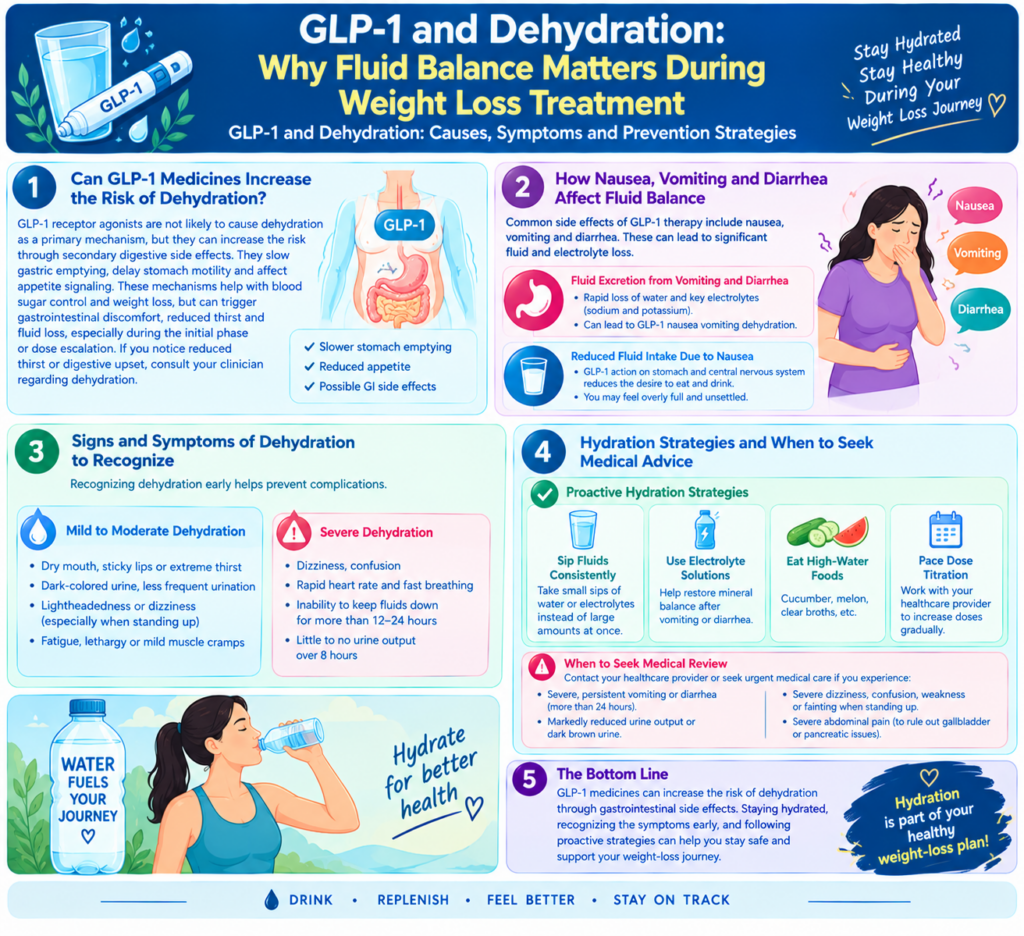
GLP-1 and Dehydration: Causes, Symptoms and Prevention Strategies
- Can GLP-1 Medicines Increase the Risk of Dehydration?
GLP-1 receptor agonists are not likely to cause dehydration as a primary biological mechanism; they can significantly increase the risk of GLP-1 fluid loss through secondary digestive side effects. GLP-1 mimic natural gut hormone GLP-1. They slow down gastric emptying, delay stomach motility and interfere with appetite signaling in nervous system. These mechanisms are highly effective in managing blood glucose and driving significant weight loss, the initial phase of therapy can trigger gastrointestinal discomfort. If patients complain reduced thirst and digestive upset, one should consult a clinician regarding dehydration.
- How Nausea, Vomiting and Diarrhea Affect Fluid Balance
Common side effects of GLP-1 therapy include nausea, vomiting and diarrhea. Understanding how these symptoms impact daily fluid balance is essential for preventing complications:
Fluid Excretion from Vomiting and Diarrhea: While nausea vomiting and diarrhea are most common side effects of GLP-1 therapy during initial phase of the treatment and during further dose escalation. This results in rapid loss of water and key electrolytes (such as sodium and potassium), leading to GLP-1 nausea vomiting dehydration.
Reduced Fluid Intake Due to Nausea: Due to GLP-1 action on stomach and Central nervous system, the desire to eat and drink reduces. Patients are likely to consume lesser fluid (also food) because he would feel overly full and unsettled.
- Signs and Symptoms of Dehydration to Recognize
It is important to promptly recognize and understand the symptoms of dehydration to address the problem on time before more severe complications develop.
Mild to Moderate Dehydration
- Persistent dry mouth, sticky lips, or extreme thirst
- Dark-colored or concentrated urine, accompanied by a decrease in urination frequency
- Mild lightheadedness or dizziness when standing up quickly (orthostatic hypotension)
- Unexplained fatigue, lethargy, or mild muscle cramps
Severe Dehydration
- Dizziness, confusion
- Rapid heart rate and fast breathing
- Inability to keep fluids down for more than 12 to 24 hours due to ongoing GLP-1 dehydration or gastrointestinal distress
- Little to no urine output over an 8-hour period
- Hydration Strategies and When to Seek Medical Advice
Proactive Hydration Strategies
- Sip Fluids Consistently: sip small amount of water or electrolytes instead of large volumes of water at once. Drinking large amount of water can worsen stomach fullness or nausea
- Incorporate Electrolyte Solutions: It is advised to incorporate electrolytic solution in patients or oral rehydration solutions that can help restore mineral balance after vomiting or diarrhea.
- Eat High-Water Foods: It is suggested to eat food that has water rich content like cucumber, melon, clear broths etc.
- Pace Dose Titration: Work with your prescribing healthcare provider to ensure medication doses are escalated gradually, minimizing gastrointestinal side effects.
When to Seek Medical Review
Patients should contact their healthcare provider or seek urgent medical review if they experience:
- Severe, persistent vomiting or diarrhea that prevents fluid retention for more than 24 hours.
- Signs of significant kidney strain, such as markedly reduced urine output or dark brown urine.
- Severe dizziness, confusion, weakness, or fainting when standing up.
- Severe abdominal pain that does not subside, which warrants immediate evaluation to rule out acute gallbladder or pancreatic issues