GLP-1 for Fatty Liver Disease: Clinical Evidence, Benefits and Limitations
- What Is Metabolic Dysfunction-Associated Steatotic Liver Disease (MASLD)?
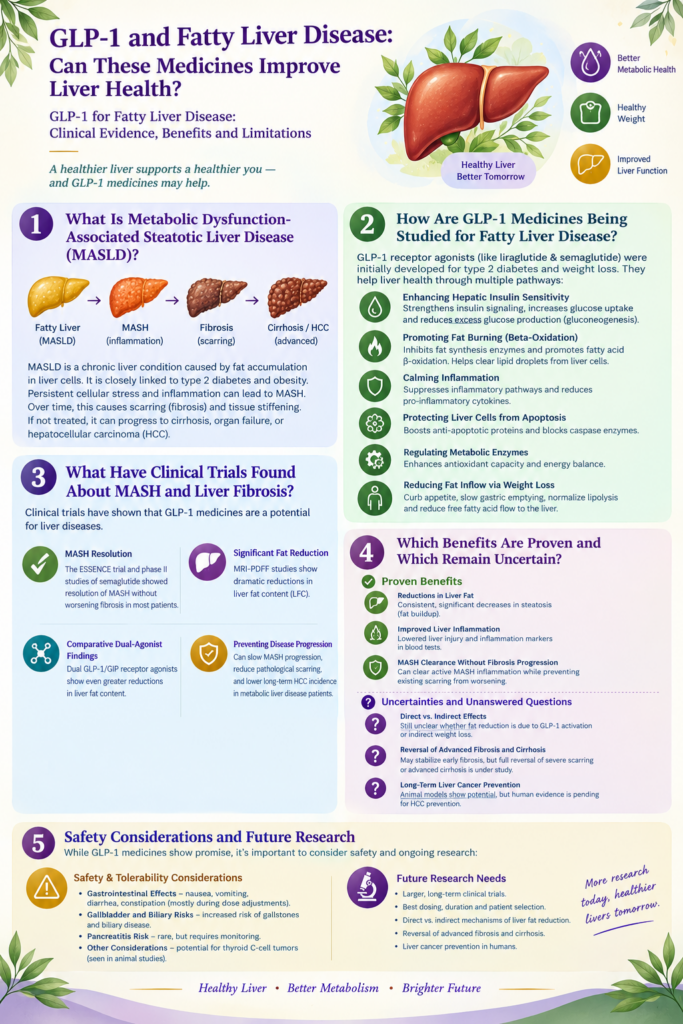
MASLD is a chronic liver condition caused by accumulation of fat in the liver cells. It is closely linked to type 2 diabetes, and obesity. When there is persistent cellular stress and inflammation due to accumulation of fat. MASLD can progress to metabolic dysfunction-associated steatohepatitis (MASH). Over time, MASH causes liver cell damage, scarring (fibrosis), and tissue stiffening. If not treated, advanced liver fibrosis can lead to irreversible liver cirrhosis, organ failure, or hepatocellular carcinoma (HCC) a form of liver cancer.
- How Are GLP-1 Medicines Being Studied for Fatty Liver Disease?
Glucagon-like peptide-1 (GLP-1) receptor agonists—such as liraglutide and semaglutide were initially developed to lower blood sugar in type 2 diabetes and promote weight loss. GLP-1 medicines target GLP-1 liver health by direct cellular signaling and indirect metabolic improvements:
- Enhancing Hepatic Insulin Sensitivity: Activating GLP-1 receptor help in strengthening of insulin signal pathways in the liver This increases glucose uptake and also suppresses excess glucose production called glucogenesis by the liver
- Promoting Fat Burning (Beta-Oxidation): GLP-1 signals an enzyme that inhibits fat synthesis enzymes. It also promotes fatty acid β-oxidation. This helps clear lipid droplets stored inside liver cells
- Calming Inflammation: GLP-1 receptor agonists are responsible for calming inflammation by suppressing inflammatory pathways and releasing pro-inflammatory cytokines.
- Protecting Liver Cells from Apoptosis: By boosting anti-apoptotic proteins and blocking caspase enzymes, GLP-1 helps prevent liver cell death.
- Regulating Metabolic Enzymes: GLP-1 signaling regulates key metabolic proteins and enhances the liver’s antioxidant capacity and energy balance.
- Reducing Fat Inflow via Weight Loss: GLP-1 helps in fat reduction by curbing appetite and slow gastric emptying. They normalize lipolysis in adipose tissue. It reduces the flow of free fatty acids into the liver.
- What Have Clinical Trials Found About MASH and Liver Fibrosis?
Clinical trials have shown that GLP-1 medicines are a potential for liver diseases.
- MASH Resolution: clinical trials such asthe ESSENCE trial and phase II studies of subcutaneous semaglutide have shown that semaglutide achieved resolution of MASH. It did not worsen liver fibrosis in majority of the patients being treated.
- Significant Fat Reduction: Magnetic resonance imaging (MRI-PDFF) studies show that GLP-1 therapies lead to dramatic reductions in liver fat content (LFC).
- Comparative Dual-Agonist Findings: In a phase IIa trial comparing the dual GLP-1/GIP receptor agonist produced even greater reductions in liver fat content. This shows potential for multi-receptor target strategies.
- Preventing Disease Progression: Preclinical and observational data indicate that GLP-1 therapy can slow MASH progression. They can reduce pathological scarring, and decrease the long-term incidence of hepatocellular carcinoma in metabolic liver disease patients
- Which Benefits Are Proven and Which Remain Uncertain?
- Proven Benefits
- Reductions in Liver Fat: Clinical trials have observed consistently significant, measurable decreases in liver steatosis (fat buildup).
- Improved Liver Inflammation: It has been observed during treatment that Blood markers of liver injury and tissue inflammation markers decrease upon taking GLP-1 medicines as advised.
- MASH Clearance Without Fibrosis Progression: Clinical trial data confirm that GLP-1 therapies can clear active MASH inflammation while preventing existing liver scarring from worsening
- Uncertainties and Unanswered Questions
- Direct vs. Indirect Effects: Scientists are still researching whether the reduction in liver fat is caused by GLP-1 receptor activation or by indirect weight reduction
- Reversal of Advanced Fibrosis and Cirrhosis: GLP-1 medicines are claiming MASH resolution and stabilization of early fibrosis. However, whether GLP-1 drugs can fully reverse severe, long-standing liver scarring or advanced cirrhosis remains under active study.
- Long-Term Liver Cancer Prevention: Even though animal models show that GLP-1 agents like liraglutide can prevent the development of liver cancer. It is yet to be proved whether GLP-1 receptor agonist can prevent development of liver cancer (HCC) in Human.
- Safety Considerations and Future Research
- Safety & Tolerability Considerations
- Gastrointestinal Effects: GLP-1 medications include common side effects like mild-to-moderate nausea, vomiting, diarrhea, and constipation, which occur mostly during dose adjustments.
- Gallbladder and Biliary Risks: Rapid weight loss and GLP-1 therapy are likely to cause an increased risk of gallstones (cholelithiasis) and gallbladder inflammation (cholecystitis).Clinical monitoring during therapy is advised.
- Future Directions & Next-Generation Therapies
- Dual and Triple Agonists: Next-generation multi-receptor agents including dual GLP-1/GIP agonists and triple GLP-1/GIP/glucagon agonists are showing efficiency in reducing liver fat and improving metabolic health in clinical trials.
- Combination Regimens: Researchers are evaluating combinations of GLP-1 drugs with certain targeted liver agents to simultaneously tackle fat accumulation, metabolic stress, and tissue fibrosis