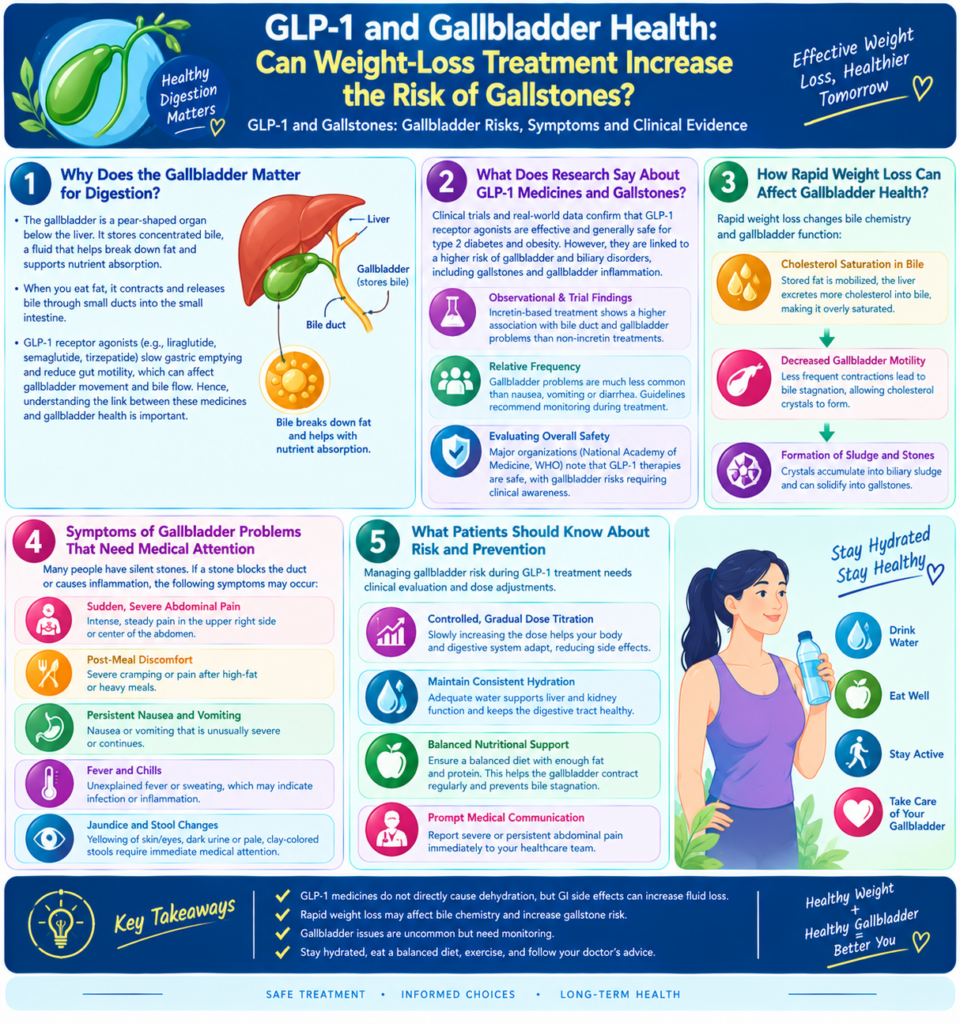
GLP-1 and Gallstones: Gallbladder Risks, Symptoms and Clinical Evidence.
- Why Does the Gallbladder Matter for Digestion?
Gallbladder is a pear-shaped organ located just below the liver. Its primary role is to store concentrated bile. Bile is a greenish yellowish fluid secreted by liver. Bile breaks down fat and helps in nutrient absorption.
When you consume food containing fat the digestive system sends signals that cause gallbladder to contract and release concentrated bile juice through small biliary ducts into the small intestine.
Glucagon-like peptide-1 (GLP-1) receptor agonist medications such as liraglutide, semaglutide, and tirzepatide mimic natural gut incretin hormones that slows down peristaltic movement of gastrointestinal track and delay stomach emptying. GLP-1 affect the movement of gastrointestinal fluid thereby understanding the interaction between these medicines and gall bladder is an important part of metabolic care.
- What Does Research Say About GLP-1 Medicines and Gallstones?
Large-scale clinical trials and two decades of real-world observational data confirm that GLP-1 receptor agonists are effective and generally safe medications for managing type 2 diabetes and chronic obesity. However, ongoing safety monitoring and clinical reviews highlight gallbladder and biliary disorders specifically gallstones and gallbladderinflammation as secondary risks that needs clinical awareness
Observational & Trial Findings: Medical reviews and real-world observation have observed that incretin-based treatment has increased association with bile duct and gallbladder problems as compared to non-incretin treatments.
Relative Frequency: the gall bladder problems are much less common in patients than other common side effects such as nausea, vomiting or diarrhea. Clinical guidelines stress that monitoring for biliary issues during active treatment.
Evaluating Overall Safety: Major medical organizations including the National Academy of Medicine and the World Health Organization (WHO) note that while GLP-1 therapies demonstrate strong overall safety and other benefits. It is recommended that gallbladder and biliary risks should be monitored during the active GLP-1 treatment.
- How Rapid Weight Loss Can Affect Gallbladder Health?
To understand the link between GLP-1 and gallstones we need to understand the how rapid weight loss affect bile chemistry
Cholesterol Saturation in Bile: when there is rapid weight loss the stored fat in adipose tissue is mobilized. The liver excretes more concentrated cholesterol to bile causing the bile to become overly saturated with cholesterol.
Decreased Gallbladder Motility: Reduced total meal volume and decreased dietary fat intake can lead to less frequent gallbladder contractions. When bile remains stagnant in the gallbladder for longer periods, saturated cholesterol begins to form microscopic crystals
Formation of Gallbladder Sludge and Stones: Over time, these cholesterol crystals can accumulate into “biliary sludge” and solidify into gallstones
- Symptoms of Gallbladder Problems That Need Medical Attention
Many people have silent stones that cause no pain or discomfort. However, if gallstones block the duct or cause inflammation in the gallbladder wall following symptoms may develop.
Sudden, Severe Abdominal Pain: Intense, steady pain in the upper right side or center of the abdomen may develop.
Post-Meal Discomfort: Severe cramping or pain that develops up shortly after eating high-fat or heavy meals.
Persistent Nausea and Vomiting: Nausea or vomiting that is unusually severe or persistent may be caused due to gall stones
Fever and Chills: Unexplained fever or sweating, which can be a sign of acute infection or inflammation in the biliary tract.
Jaundice and Stool Changes: Yellowing of the skin or white parts of the eyes (jaundice), unusually dark urine, or pale, clay-colored stools. These symptoms require immediate medical attention.
- What Patients Should Know About Risk and Prevention
Managing gallbladder risk during GLP-1 treatment needs clinical evaluation and strategies to adjust dose.
Controlled, Gradual Dose Titration: escalating the dose slowly under healthcare supervision helps maintain the pace of weight loss. This helps digestive tract and liver adapt gradually to the medicine.
Maintaining Consistent Hydration: taking enough water throughout the day help maintain normal liver and kidney function. This also helps maintain digestive tract.
Balanced Nutritional Support: ensure balanced diet including adequate fat and protein intake. This will keep the gallbladder contracting regularly, preventing prolonged bile stagnation
Prompt Medical Communication: if patients experience severe or persistent abdominal pain, they should immediately notify their prescribing healthcare team
The Value of Multidisciplinary Wraparound Care: As emphasized by experts at the National Academy of Medicine and the World Health Organization (WHO), access to GLP-1 medications should be paired within a supportive “wraparound care”