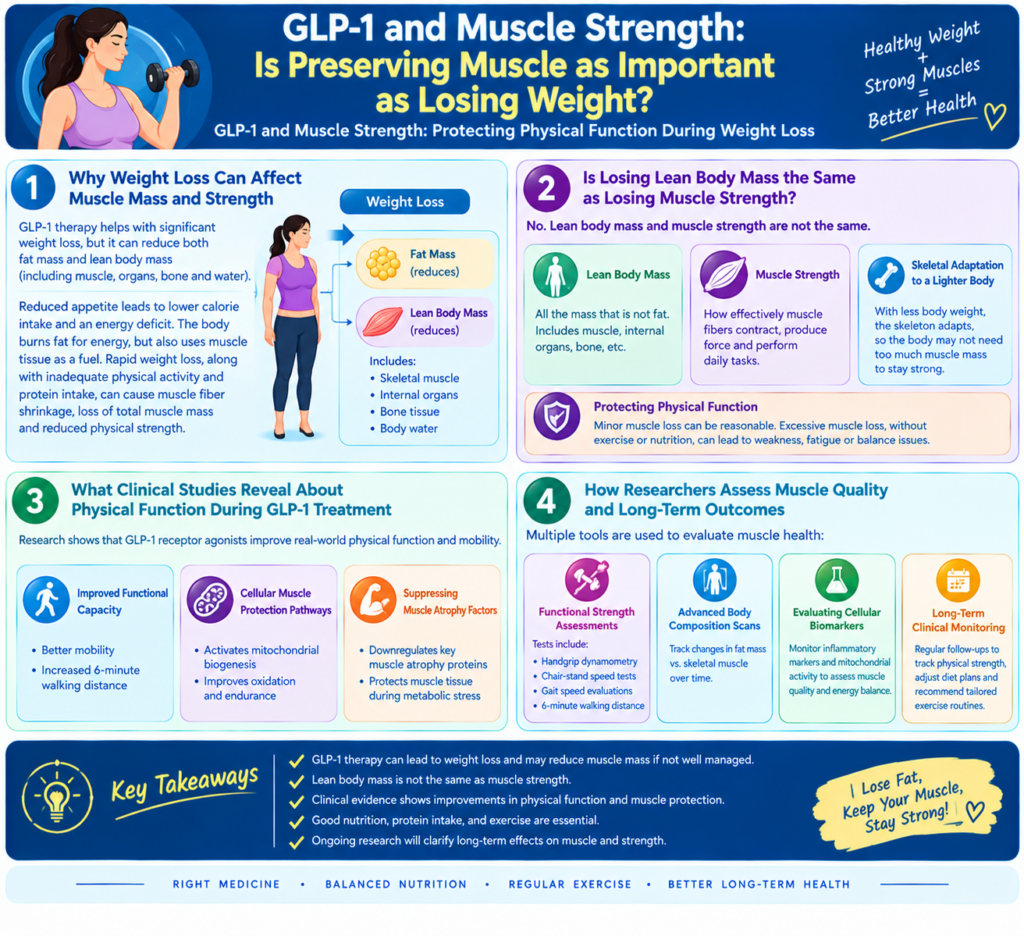
GLP-1 and Muscle Strength: Protecting Physical Function During Weight Loss
- Why Weight Loss Can Affect Muscle Mass and Strength
When GLP-1 therapy causes substantial amount of weight loss it generally involves reductions in both fat mass and lean body mass. Lean body mass includes skeletal muscle, internal organs, bone tissue, and body water. When GLP-1 therapy causes loss of appetite there is significant reduction in caloric intake as well as energy deficit. To make energy they burn fat. However, there is also muscle burn to get energy. The muscle tissue acts as a fuel. If there is rapid weight reduction and it is accompanied by inadequate physical activity and protein intake this leads to shrinking of muscle fiber and noticeable reduction in total mass and physical strength
- Is Losing Lean Body Mass the Same as Losing Muscle Strength?
Following are the key points that distinguishes lean body mass from muscle strength.
Lean Body Mass vs. Muscle Strength: lean body mass is all the mass that is not fat. For example, internal organs muscle tissue skeletal etc.whereas muscle strength and muscle quality reflect how effectively skeletal muscle fibers contract, produce force, and perform daily physical tasks.
Skeletal Adaptation to a Lighter Body: to carry more weight the skeletal muscle carry more load and is shaped accordingly to the load. However reduced body mass help skeletal adapt to lighter weight. In this condition the body does not require too much muscle mass to maintain a lighter body weight.
Protecting Physical Function: while minor muscle loss due to weight reduction is reasonable excessive muscle loss without active stimulation can cause physical weakness, fatigue, or impaired balance
- What Clinical Studies Reveal About Physical Function During GLP-1 Treatment
clinical evidence demonstrates that GLP-1 receptor agonist therapy substantially improves real-world physical function and mobility:
Improved Functional Capacity in Clinical Trials: Clinical Trials have shown improved physical capacity in obese patients under GLP-1 therapy. They improve mobility, and increased 6-minute walking distance.
Cellular Muscle Protection Pathways: Preclinical research shows that GLP-1 receptor activation directly influences skeletal muscle biology. GLP-1 signaling activates pathway to promote mitochondrial biogenesis. It helps in oxidation and physical exercise endurance
Suppressing Muscle Atrophy Factors: Molecular studies show that GLP-1 receptor activation can downregulate key muscle atrophy proteins helping protect muscle tissue from breakdown during metabolic stress.
- How Researchers Assess Muscle Quality and Long-Term Outcomes
To ensure that weight management supports overall health, clinical researchers evaluate muscle health using diverse tools:
Functional Strength Assessments: Measuring real-world physical capability using standardized tests such as :
- handgrip dynamometry
- chair-stand speed tests
- gait speed evaluations
- 6-minute walking distance
Advanced Body Composition Scans: advanced body scans are done to analyze and track relative changes in fat mass versus skeletal muscle over multi-year treatment periods.
Evaluating Cellular Biomarkers: Clinicians track inflammatory markers and mitochondrial activity to assess muscle tissue quality and cellular energy balance
Long-Term Clinical Monitoring: Regular clinical follow-up allows healthcare teams to monitor physical strength, adjust dietary plans, recommend tailored exercise routines.