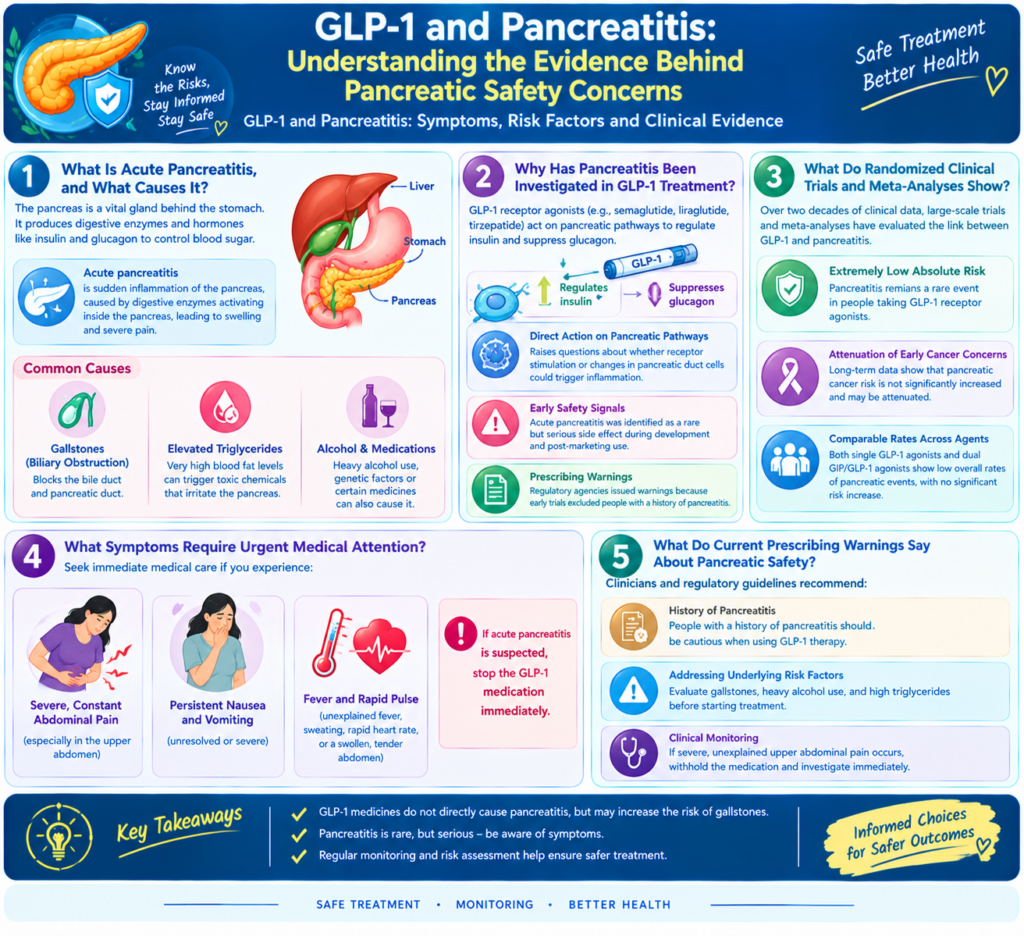
GLP-1 and Pancreatitis: Symptoms, Risk Factors and Clinical Evidence
- What Is Acute Pancreatitis, and What Causes It?
Pancreas is an essential gland located behind the stomach. It has two core roles in maintaining metabolic health.
- producing digestive enzymes that break down food in the small intestine
- secreting regulatory hormones such as insulin and glucagon to control blood sugar.
Acute pancreatitis is a sudden inflammation of the pancreas. It happens due to digestive enzymes being activated inside the pancreas causing localized tissue irritation, swelling, and severe pain:
- Gallstones (Biliary Obstruction): the most common cause of pancreatitis is gallstones which blocks the gall duct as well as pancreatic duct blocking the flow of digestive enzymes.
- Elevated Blood Triglycerides: sever high blood fat levels can cause breakdown of toxic chemicals which can irritate pancreatic tissue
- Alcohol & Medications: acute pancreatic inflammation can be cause by high consumption of alcohol, genetic factors certain specialized medicines.
- Why Has Pancreatitis Been Investigated in GLP-1 Treatment?
GLP-1 RAs work by binding GLP-1 receptors which are present in pancreas area to regulate the production of insulin and suppress glucagon. Because GLP-1 medicines act directly on pancreatic pathways, it is being investigated whether receptor stimulation or changes in pancreatic duct cells could trigger localized inflammation
Early Safety Signals During the development of drug and post marketing period acute pancreatitis was identified as rare but it can pose serious side effects in incretin based therapies
Prescribing Warnings: Regulating agencies prescribed warnings on GLP-1 medications because early clinical trials routinely excluded individuals with a prior medical history of pancreatitis
- What Do Randomized Clinical Trials and Meta-Analyses Show?
Over two decades of real-world clinical data, large-scale randomized clinical trials and comprehensive meta-analyses have rigorously evaluated the relationship between GLP-1 and pancreatitis
Extremely Low Absolute Risk: Clinical trials and meta-analysis have shown that pancreatitis remain a rare event in the GLP-1 receptor agonists therapy.
Attenuation of Early Cancer Concerns: large clinical trails and long-term observational data have shown that pancreatic cancer can largely be attenuated recent evidence.
Comparable Rates Across Agents: Studies evaluating single GLP-1 agonists as well as dual GIP/GLP-1 agonists show low overall rates of pancreatic events, with no statistically significant increase in risk.
- What Symptoms Require Urgent Medical Attention?
Recognizing symptoms of acute pancreatitis seeks medical attention. Patients using GLP-1 medications should seek immediate emergency medical evaluation if they experience:
Severe, Constant Abdominal Pain: one should immediately seek medical help if he/she experiences severe constant abdominal pain.
Unresolved Nausea and Vomiting persistent vomiting is a cue for you to take medical help
Fever and Rapid Pulse: Unexplained fever, sweating, rapid heart rate, or a swollen, tender abdomen should invite immediate medical attention
If acute pancreatitis is suspected, treatment with the GLP-1 medication must be stopped immediately
- What Do Current Prescribing Warnings Say About Pancreatic Safety?
Clinicians and regulatory guidelines have clear recommendation about GLP-1 pancreatic safety:
History of Pancreatitis: since GLP-1 medications have not been studied for pancreatitis patients. People having history of pancreatitis is recommended to be cautious while taking GLP-1 therapy
Addressing Underlying Risk Factors: Before starting GLP-1 therapy, healthcare providers evaluate baseline risk factors such as a history of severe gallstones, heavy alcohol use, or high blood triglycerides. These could trigger pancreatic inflammation
Clinical Monitoring: if a patient develops severe, unexplained upper abdominal pain during therapy, the health care provider should immediately withhold the medication while it is being diagnosed