GLP-1 and the Gut Microbiome: Exploring the Link Between Gut Bacteria and Weight Loss
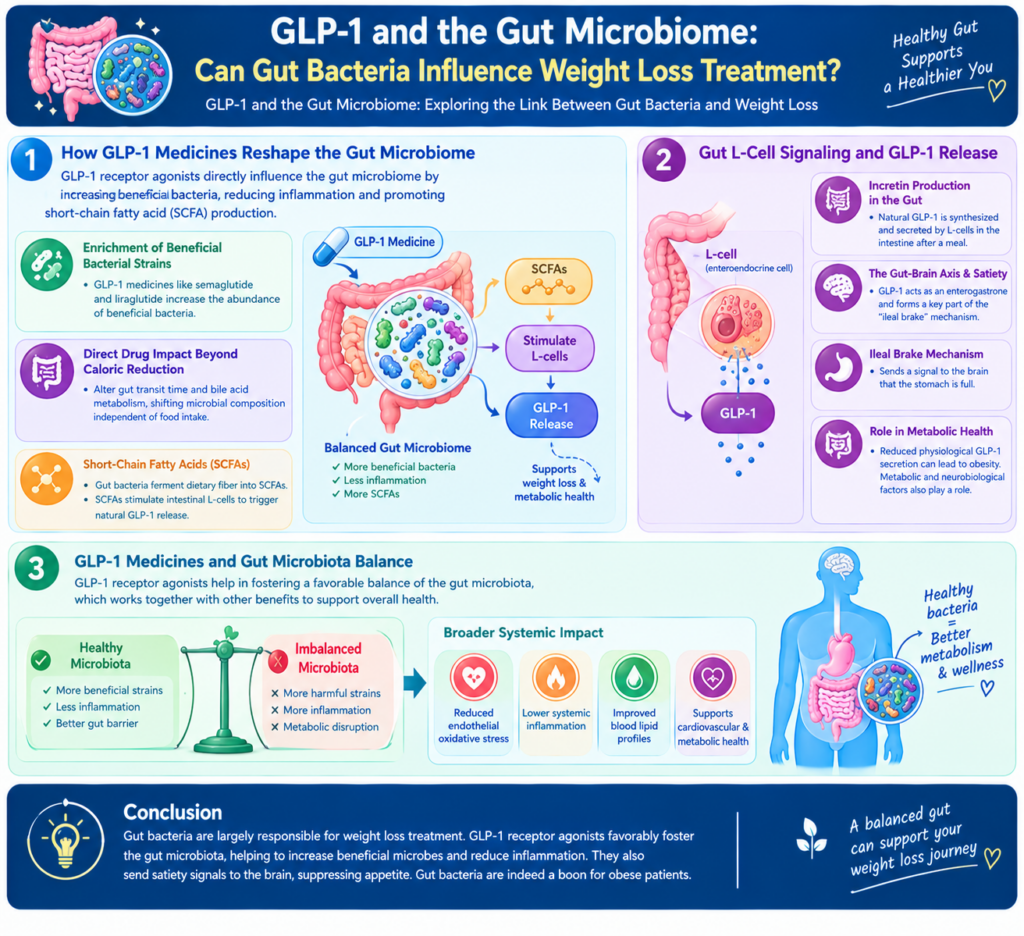
- Gut microbial ecosystem is largely affected by GLP-1 receptor agonists. They directly reshape the Gut Microbiome. GLP-1 medicines help in enriching beneficial and anti-inflammatory bacterial species. Also, short chain fatty acids produced by gut microbes naturally stimulate intestinal GLP-1 secretion.
- Enrichment of Beneficial Bacterial Strains: GLP-1 medications like semaglutide, liraglutide consistently increase the abundance of beneficial bacteria
- Direct Drug Impact Beyond Caloric Reduction: GLP-1 drugs alter gut transit time and bile acid metabolism this helps shift the microbial composition thereby making microbial presence in the gut independent of food intake.
- Short-Chain Fatty Acids & Endogenous Incretin Stimulation: Gut bacteria ferment dietary fiber into short-chain fatty acids. These fatty acids act on intestinal L-cell receptors to trigger natural GLP-1 release.
- Gut L-Cell Signaling and GLP-1 Release:
- Incretin Production in the Gut: After ingestion natural GLP-1 is synthesized and secreted by specialized enteroendocrine L-cells located in the intestine.
- The Gut-Brain Axis & Satiety: Upon release, GLP-1 acts as an enterogastrone and forms a core part of the “ileal brake” mechanism.
- Ileal Brake Mechanism: where gut sends the signal to the brain that the stomach is full.
- Role in Metabolic Health: When physiological secretion of GLP-1 in the gut is reduced it leads to development of obesity. Metabolic and neurobiological factors affect obesity greatly.
- GLP-1 Medicines and Gut Microbiota Balance:
- Fostering Favorable Microbiota: GLP-1 receptor agonists help in fostering favorable balance of the gut microbiota.
- Broader Systemic Impact: This positive shift in the gut microbial ecosystem works alongside reduced endothelial oxidative stress, lower systemic inflammation, and improved blood lipid profiles to support overall cardiovascular and metabolic health
Conclusion:
Gut bacteria are largely responsible for weight loss treatment. GLP-1 receptor agonists favorably foster the gut microbiota. Which means the different types of microbes residing in the gut are well produced in a balanced way with help of GLP-1 medicines. They help send satiety signal to the brain thereby suppressing appetite in the patients. Gut bacteria are indeed a boon for obese patients.