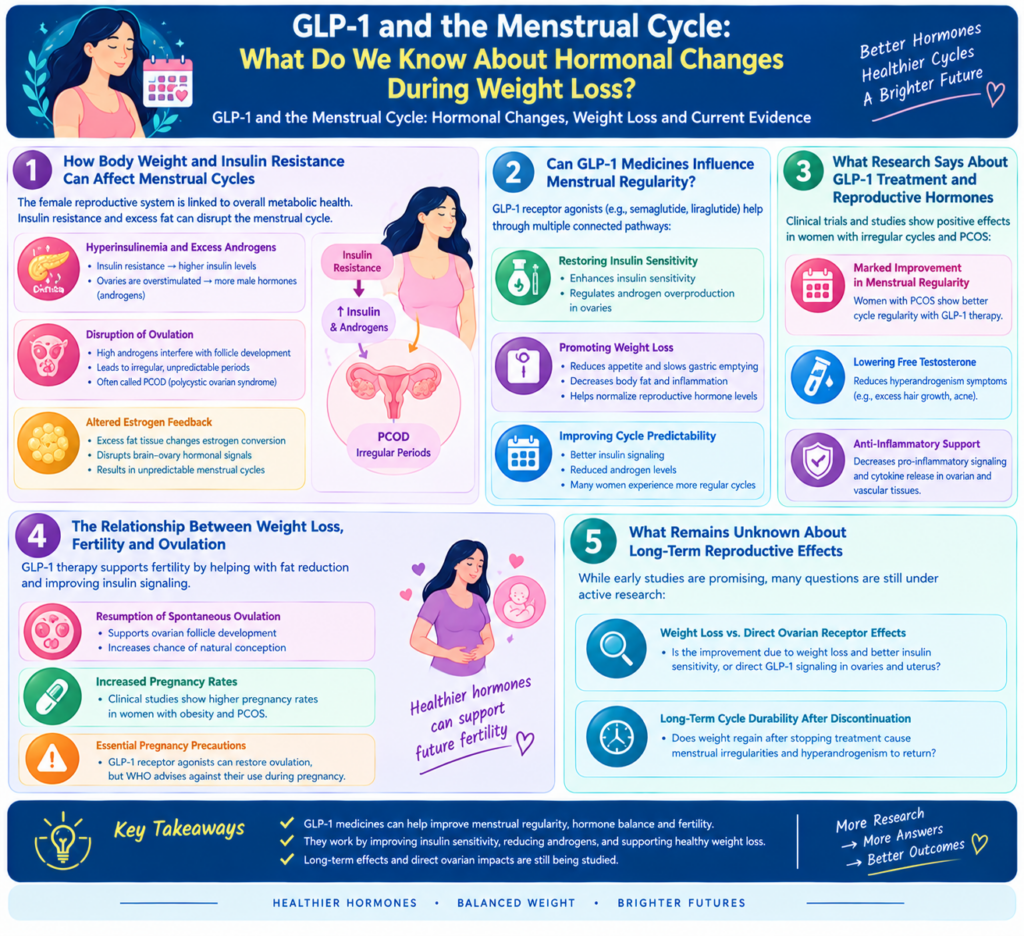
GLP-1 and the Menstrual Cycle: Hormonal Changes, Weight Loss and Current Evidence
- How Body Weight and Insulin Resistance Can Affect Menstrual Cycles
The female reproductive system is linked to overall metabolic health. Some of the causes for menstrual dysfunction is insulin resistance and excess fat.
Hyperinsulinemia and Excess Androgens: When body tissue becomes resistant to insulin, pancreas produce higher level of insulin to manage blood glucose. In this situation ovaries are overstimulated by the insulin thereby producing higher amount of male hormone (androgen)
Disruption of Ovulation: higher level of androgen interferes with the ovulation (release of egg) process by preventing development of ovarian follicle. This usually leads to irregular, unpredictable menstrual periods. This condition is called PCOD (polycystic ovarian syndrome)
Altered Estrogen Feedback: Excess adipose tissue (fat mass) also alters peripheral estrogen conversion. It disrupts the hormonal signal pathways from brain to ovaries resulting in unpredictable menstrual cycle.
- Can GLP-1 Medicines Influence Menstrual Regularity?
Glucagon-like peptide-1 (GLP-1) receptor agonists such as semaglutide and liraglutide have shown significant impact on menstrual regularity through interconnected metabolic and neuroendocrine pathways:
Restoring Insulin Sensitivity: GLP-1 receptor when activated they enhance insulin sensitivity and metabolic activities. They help in regulation of overproduction of androgen in ovaries. This addresses the core cause of cycle irregularities.
Promoting Weight Loss: GLP-1 receptor agonists help in brain signal from intestine so that there is loss of appetite. This appetite suppression and slow gastric emptying helps in significant weight loss. Due to this weight loss total body fat is decreased and inflammation is reduced thus help normalize overall circulating reproductive hormone levels
Improving Cycle Predictability: As GLP-1 receptor agonists help in insulin signaling and regulation of overproduction of androgen in ovaries, many women experience a return of spontaneous, predictable menstrual cycles
- What Research Says About GLP-1 Treatment and Reproductive Hormones
Clinical trials and observable studies about GLP-1 receptor agonists say that women with irregular menstrual cycle and PCOS symptoms have shown remarkably positive effects of GLP-1 RAs:
Marked Improvement in Menstrual Regularity: Clinical studies have shown that women with PCOS and irregular menstrual cycles show mark improvement of Manstural regularity upon taking GLP-1 therapy.
Lowering Free Testosterone: Studies show that GLP-1 therapy reduces level of free testosterone thereby helping reduce physical symptoms of hyperandrogenism (such as excess hair growth and inflammatory acne)
Anti-Inflammatory Tissue Support: research demonstrate that GLP-1 helps reduce pro inflammatory signaling pathway and cytokine release. This helps calm chronic low-grade inflammation within ovarian and vascular tissues.
- The Relationship Between Weight Loss, Fertility and Ovulation
GLP-1 therapy promotes female fertility by helping in fat reduction and correcting insulin signaling.
Resumption of Spontaneous Ovulation: Since GLP-1 therapy helps in development of ovarian follicle. This allows spontaneous ovulation to resume, significantly increasing the likelihood of natural conception.
Increased Pregnancy Rates in Clinical Studies: In clinical studies women with obesity and PCOS have shown higher pregnancy rate after taking GLP-1 therapy.
Essential Pregnancy Precautions: Even though GLP-1 receptor agonists can restore ovulation, the WHO explicitly emphasize that pregnant women should not take GLP-1 therapy
- What Remains Unknown About Long-Term Reproductive Effects
While initial studies have shown positive effects of GLP-1 on reproductive health, there still many scientific questions yet to be answered by researchers who are actively studying the effects of GLP-1 on reproductive health.
Weight Loss vs. Direct Ovarian Receptor Effects: researchers are investigating whether it is the weight loss and improved insulin sensitivity contributing to improved menstrual cycles or is it the direct GLP-1 receptor signaling within the ovaries and uterus.
Long-Term Cycle Durability After Treatment Discontinuation: clinical evidence show that discontinuation of treatment results in weight regain. Researchers are tracking whether this weight regain causes menstrual irregularities and hyperandrogenism (over androgen production) to return to pre-treatment baselines.