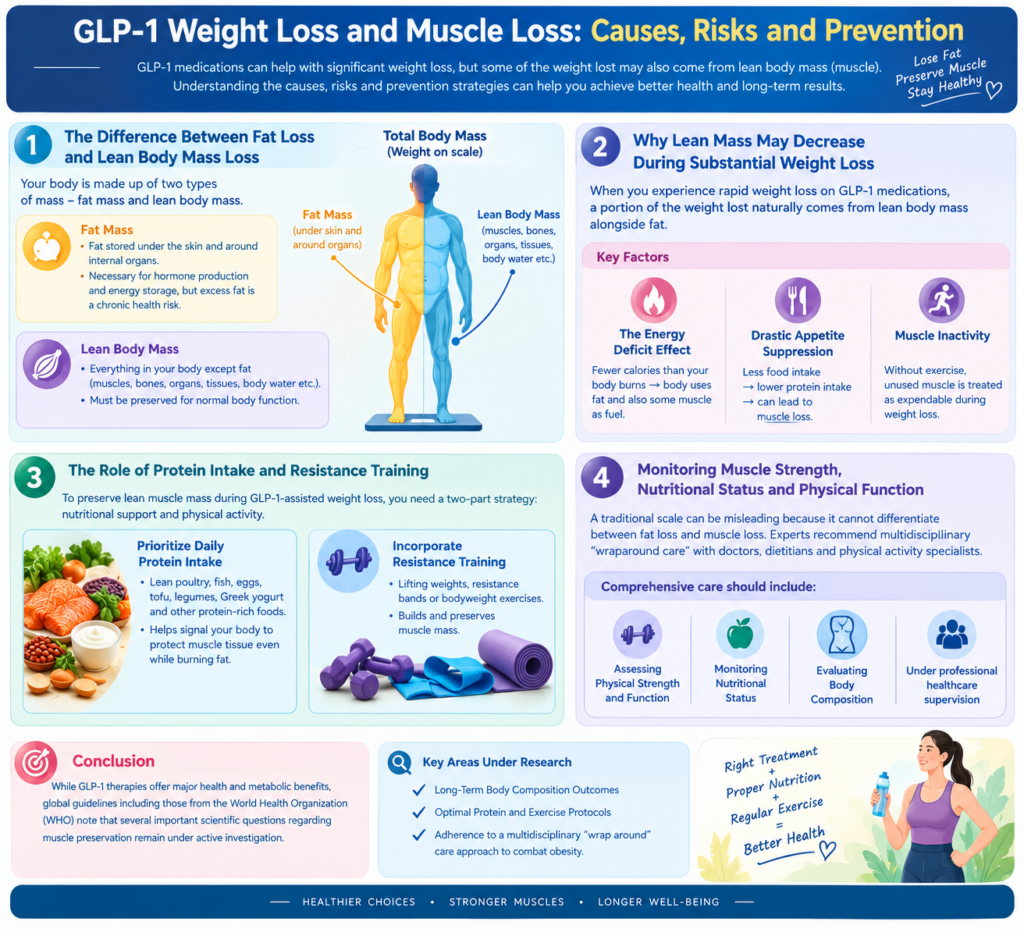
- The Difference Between Fat Loss and Lean Body Mass Loss
- When you check your weight on a weighing scale it points to your total body mass. Your body is composed of two types of mass namely fat mass and lean body mass.
- Fat Mass: Fat mass is the mass of your fat stored under your skin and around other internal organs. While certain mass is necessary for hormone production and storing energy, excess mass is considered a chronic disease and needs to be addressed carefully.
- Lean Body Mass: lean body mass is the mass of your body other than fat. This includes everything in your body except fat like, your skeletal, organs tissues body water etc
Lean body mass must be preserved for body to function normally.
- Why Lean Mass May Decrease During Substantial Weight Loss
- When individuals experience rapid weight loss on GLP-1 medications, a portion of the weight lost naturally comes from lean body mass alongside fat
Several key factors contribute to this loss of muscle:
- The Energy Deficit Effect: When you eat fewer calorie than your body burns every day the your body looks for alternative sources. While it burns fat for energy some amount of muscle is burned as fuel. The larger and faster is calorie reduction higher will be muscle protein burns.
- Drastic Appetite Suppression: GLP-1 medication signals stomach and brain for fullness and satiety thereby making food intake less. This reduces protein intake as well. Lower protein intake can lead to muscle loss.
- Muscle Inactivity: if a person loses weight without indulging in physical exercises it sends signal to body that the muscle is inactive and thus the unused muscle is treated as expendable during weight loss .
- The Role of Protein Intake and Resistance Training
- Preserving lean muscle mass during GLP-1-assisted weight loss requires a two-part strategy: nutritional support and physical activity.
- Prioritizing Daily Protein Intake
It is important to prioritize protein-rich foods such as lean poultry, fish, eggs, tofu, legumes, and Greek yogurt at every meal. Ensuring a steady supply of protein signals the body to protect existing muscle tissue even while burning stored fat for energy.
- Incorporating Resistance Training
Physical exercise specifically resistance or strength training is the single most effective way to protect muscle mass during weight loss:
- Resistance training includes lifting weights, using resistance bands, or performing bodyweight exercises such as squats, push-ups, and step-ups.
- Monitoring Muscle Strength, Nutritional Status, and Physical Function
- Relying solely on a traditional scale can be misleading because it cannot differentiate between fat loss and muscle loss. Experts at the National Academy of Medicine emphasize that GLP-1 treatment should be paired with multidisciplinary “wraparound care” a supportive healthcare framework that includes doctors, dietitians, and physical activity specialists
- Comprehensive care should include:
Assessing Physical Strength and Function
Monitoring Nutritional Status
Evaluating Body Composition
These should be done under professional healthcare supervision.
Conclusion:
While GLP-1 therapies offer major health and metabolic benefits, global guidelines including those from the World Health Organization (WHO) note that several important scientific questions regarding muscle preservation remain under active investigation Long-Term Body Composition Outcomes; Research is currently evaluating how body composition changes over long-term treatment. Optimal Protein and Exercise Protocols; is being formulated by scientists. This protocol must be adhered strictly to combat obesity with much multidisciplinary and “wrap around” care.