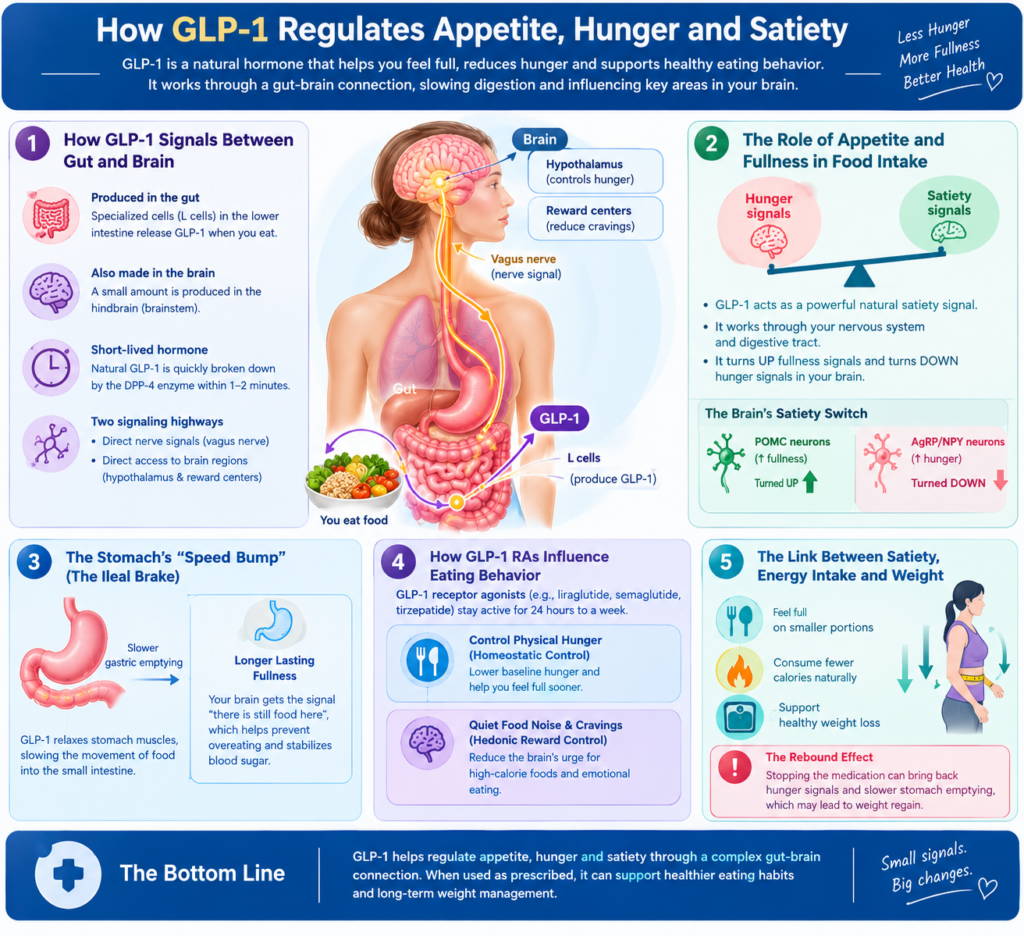
- How GLP-1 signals between the gut and brain.
- Glucagon-like peptide-1 (GLP-1) is a natural messenger hormone created in your body. It is produced primarily by specialized sensing cells (enteroendocrine L cells) located in the lining of your lower intestine
- When you eat food, these intestinal cells detect the presence of nutrients and release GLP-1 directly into your digestive system and bloodstream. A small amount of GLP-1 is also produced directly within nerve centers in the lower part of the brain called hindbrain.
- Under normal conditions, natural GLP-1 is extremely short-lived. An active enzyme in your bloodstream (known as DPP-4) breaks down and turns off natural GLP-1 within just 1 to 2 minutes after it is released.
- Because the hormone disappears so quickly, your body relies on two main signaling highways to send “fullness” messages from your gut to your brain before the hormone breaks down
- Direct Nerve Highways (The Vagus Nerve):
Specialized sensor fibers line your gut and liver blood vessels. When GLP-1 attaches to receptors on these nearby nerve endings, it immediately sends a rapid electrical signal up the vagus nerve—the main communication cable connecting your organs to your brainstem
GLP-1 does not work only through the vagus nerve. Its effects involve several pathways, including nerve signals and direct actions on certain areas of the brain.
- Direct Brain Access: Small amounts of GLP-1 that circulate through the bloodstream reach specialized brain regions that control hunger and balance. These include the hypothalamus (your brain’s primary appetite control tower) and brain reward centers that govern food cravings.
- The role of appetite and fullness in food intake.
- Your body relies on a delicate balance between hunger signals (which urge you to seek food) and satiety signals (which tell you that you have eaten enough and can stop). GLP-1 acts as one of the body’s most powerful natural satiety signals, it works through both your nervous system and your digestive tract
- Flipping the Brain’s Satiety Switch: Within your brain’s appetite control center, GLP-1 acts like a master switchboard. It turns UP the activity of nerve cells (POMC neurons (pro-opiomelanocortin neurons)) These neurons help reduce food intake and promote feelings of fullness, while simultaneously turning DOWN the activity of nerve cells (AgRP/NPY neurons (agouti-related peptide/neuropeptide Y neurons)) that generate intense hunger and stomach growling
- The Stomach’s “Speed Bump” (The Ileal Brake): In your digestive tract, GLP-1 works as a natural slowing mechanism often called the “ileal brake”. It relaxes the muscles of the stomach, thereby slowing down the rate at which food empties into the small intestine. It delays the movement of the gut to slow down emptying of food form stomach.
- Long-Lasting Post-Meal Fullness: Because food stays inside your stomach longer, your brain receives signals from stomach, “There is still food here”. This prolongs your post-meal satisfaction, naturally prevents overeating, and prevents sharp spikes in blood sugar after meals
- How GLP-1 receptor agonists influence eating behavior.
- While natural GLP-1 lasts only a couple of minutes, modern GLP-1 RAs medications—such as liraglutide, semaglutide, and tirzepatide—are specially engineered to resist breakdown by body enzymes. This allows these medications to remain active and effective in the body for anywhere from 24 hours to a full week.
These medications transform daily eating behaviors by targeting two distinct types of appetite signaling in the brain:
- Controlling Physical Hunger (Homeostatic Control): By providing, activation of brain satiety centers throughout the day, GLP-1 medications lower your baseline physical hunger throughout the day. You naturally feel less hungry between meals and feel satisfied much earlier when eating.
- Quieting “Food Noise” and Cravings (Hedonic Reward Control): Beyond basic hunger, your brain has a powerful reward system driven by pleasure and motivation. GLP-1 medications act directly on these reward circuits, reducing the brain’s urge for high-calorie. Users frequently describe a dramatic reduction in “food noise” or cravings about food—making it much easier to turn down snacks and avoid emotional or compulsive eating
- The relationship between satiety, energy intake and weight management.
- GLP-1 therapies produce significant weight loss by creating a natural, comfortable reduction in daily calorie intake as described above. Because people feel genuinely full on smaller portions and experience fewer intense cravings, they consume fewer total calories without feeling hungry.
- The “Rebound Effect” When Treatment Stops: stopping the medication causes stomach emptying and brain hunger signals to return to their original baseline as GLP-1 medicines worked on it manage hunger rather than altering the mechanism. Clinical studies show that people who abruptly stop taking GLP-1 drugs typically regain about two-thirds of their lost body weight. This “rebound effect” illustrates that GLP-1s work like medications for high blood pressure or cholesterol—they control the chronic condition as long as they are used.
- Combining Medication with Lifestyle Support: The WHO guideline conditionally recommends pairing long-term GLP-1 medication with intensive behavioral therapy. This includes practical guidance on healthy nutrition, regular physical activity, and ongoing coaching.