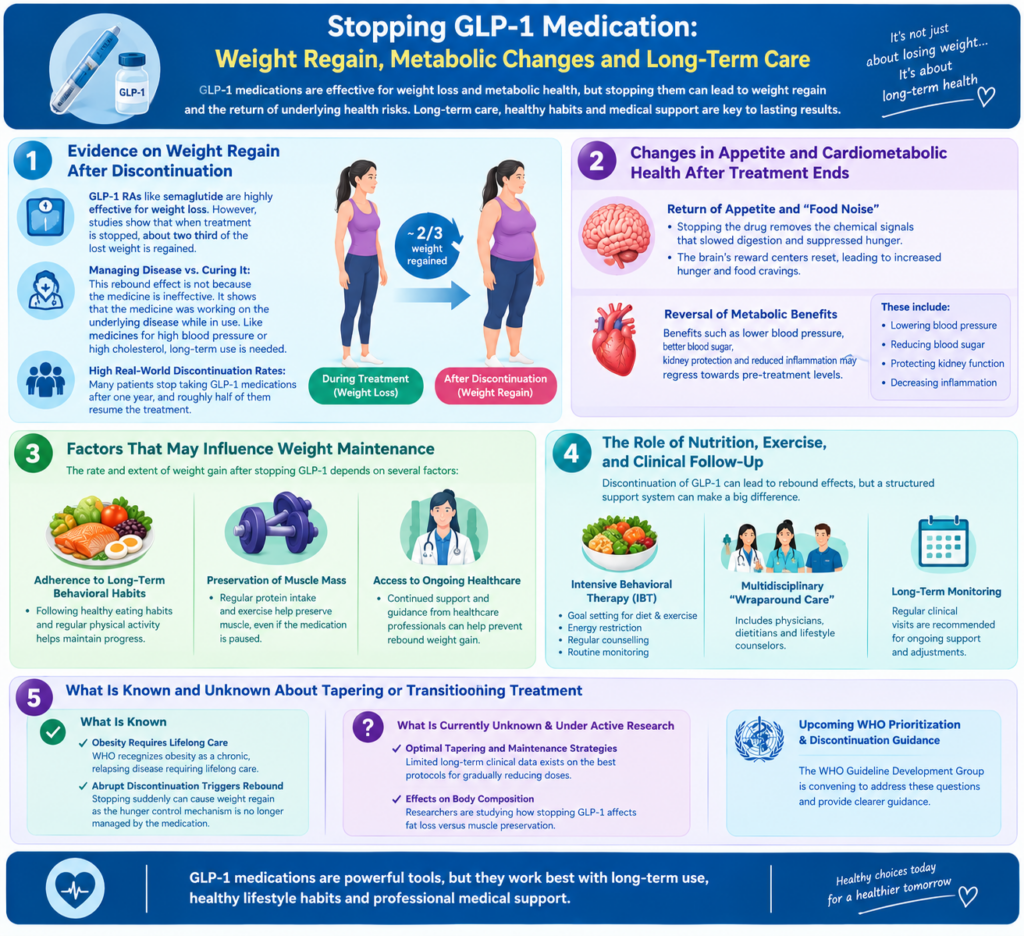
- Evidence on Weight Regain After Discontinuation
- GLP-1 RAs medicines such as semaglutide and others are highly effective in managing chronic obesity and resulting in weight loss. However, clinical evidence shows that when treatment is stopped, the body experiences a rebound effect. Rebound effect means those who had lost weight after using GLP-1 Medicines have shown regain two third of their lost weight after discontinuation of medicine. This has been shown in the clinical data.
- Managing Disease vs. Curing It: Medical experts and WHO emphasize that this rebound effect is not because the medicine is not effective rather it shows that the medicine was working on underlying disease while in use. Much like taking medicines for high cholesterol and high blood pressure everyday. This treatment should go on for lifelong care to show continued effect. Weight loss management program should adhere to the prescribed multidisciplinary wraparound care.
- High Real-World Discontinuation Rates: studies show that majority of the GLP-1 medication consumer stopped taking medication after one year. And Roughly half of those resumed the treatment highlighting the recurring, long-term challenge of managing weight.
- Changes in Appetite and Cardiometabolic Health After Treatment Ends
- GLP-1 medications work by mimicking the gut hormone, stopping the drug removes the chemical signals that had slowed digestion and had suppressed hunger.
- Return of Appetite and “Food Noise”: Since the GLP-1 medication had delayed gastric emptying and reduced craving signals in the brain’s reward centers. Now that it has been stopped the brain signal reset and digestion takes place at its own natural speed, thereby spiking the urge for food and hunger.
- Reversal of Metabolic Benefits: Beyond weight loss, GLP-1 medications provide broad cardiometabolic improvements—such as
- lowering blood pressure,
- reducing blood sugar,
- protecting kidney function,
- decreasing systemic inflammation
As the weight is regained after discontinuation of GLP-1 medicines these cardiometabolic conditions regress towards pre treatment levels.
- Factors That May Influence Weight Maintenance
- While weight gain after discontinuation of GLP-1 medicines is common. The rate and extent of weight gain depend on varying factors
- Adherence to Long-Term Behavioral Habits
Strict adherence to nutritional habits developed during the GLP-1 treatment and physical activities can show progress in their weight loss management program.
- Preservation of Muscle Mass: Another factor that contributes to weight loss is regular protein intake and exercise. This can prove effective in weight loss management even if medicines are paused.
- Access to Ongoing Healthcare: access to healthcare guidelines if continued after discontinuation of medicines can still prove effective on weight loss management and prevent rebound effect
- The Role of Nutrition, Exercise, and Clinical Follow-Up
Discontinuation of GLP-1 has rebound effect whereby the role of nutrition exercise and clinical follow up can show significant improvement in weight loss.
- Intensive Behavioral Therapy (IBT): The official WHO obesity guidelines conditionally recommend pairing GLP-1 therapy with intensive behavioral therapy. This includes structured goal setting for diet, exercise , energy restriction regular counselling and routine monitoring of health
- Multidisciplinary “Wraparound Care”: Medical experts at the National Academy of Medicine highlight that mere access to drugs is not enough. Safe long-term management requires a “wraparound care” team including physicians, dietitians, and lifestyle counselors
- Long-Term Monitoring: regular clinical visit is recommended.
- What Is Known and Unknown About Tapering or Transitioning Treatment
What Is Known
Obesity Requires Lifelong Care: It is not ambiguous for anyone to understand that obesity requires lifelong management. The WHO formally recognizes “obesity as a chronic, relapsing disease requiring lifelong care”
Abrupt Discontinuation Triggers Rebound: abrupt discontinuation can cause the patients to regain weight as they are not being managed by GLP-1 on their hunger control mechanism.
What Is Currently Unknown & Under Active Research
Optimal Tapering and Maintenance Strategies: Global guidelines acknowledge that there are currently limited long-term clinical data on the best protocols for gradually tapering doses
Effects of Discontinuation on Body Composition: Researchers are actively evaluating stopping GLP-1 drugs impacts long-term ratios of fat loss versus muscle preservation
Upcoming WHO Prioritization & Discontinuation Guidance: The WHO Guideline Development Group is convening to review emerging clinical evidence regarding GLP-1 discontinuation.
Conclusion:
The GLP-1 drugs also called “miracle Drug” is effective for weight loss. However, its stoppage can cause rebound effect in many patients. It is also suggested by WHO to involve multidisciplinary wraparound care for the treatment and even after its discontinuation the healthy habits can help retain muscle mass and can further help in weight loss if adhered to good food habits and physical exercises.